
It is the endeavor of Yang Tai Chi Academy to share the hidden knowledge that made the system so famous both for health and martial skills. Our mission is to maintain the old methods and traditions for those wanting to gain better martial attainment and to generate and maintain the body’s essential muscle mass into older age.
In this page Sifu Damon sheds some light on how Tai Chi can make you physically stronger as described in the classical teachings. Join him as he shares his life knowledge of the art coupled with his unique understanding of the human body from over 3 decades working as a hands-on Physical Therapist and specialist Massage Acupuncture and Bodywork educator.
Tai Chi builds strength
Not just superficially, but in a way that transforms your body’s functional capacity, balance and resilience over time.
Neuromuscular Foundations of Tai Chi Strength.
Tai Chi builds strength by enhancing neuromuscular coordination, which is the brain’s ability to recruit and synchronize muscle fibres efficiently. Unlike conventional strength training that isolates muscles, Tai Chi trains movement patterns—integrated sequences that involve multiple joints and muscle groups working together.
This coordination improves motor unit recruitment, meaning your muscles fire more effectively with less effort. It’s especially beneficial for older adults and those with neurological conditions like Parkinson’s disease, where motor control is compromised.
A study published in BMJ Open Sport & Exercise Medicine found that Tai Chi significantly improved handgrip strength, single-leg stance time, and thoracolumbar spine flexibility—markers of neuromuscular strength and postural control.
Muscular Engagement Through Low-Impact Load.
Tai Chi’s slow, deliberate movements create constant muscular tension, especially in the lower body. Movements like “Brush Knee,” “Repulse Monkey” and “Snake Creeps Down” require semi-squat positions and controlled weight shifts, which activate:
Quadriceps and hamstrings for knee stability.
Gluteal muscles for hip control.
Calves and ankles for balance.
Core muscles for trunk stability.
These movements are performed without external resistance, but the internal load—from gravity, body weight and sustained muscular engagement—builds endurance-based strength.
Isometric Strength and Joint Protection.
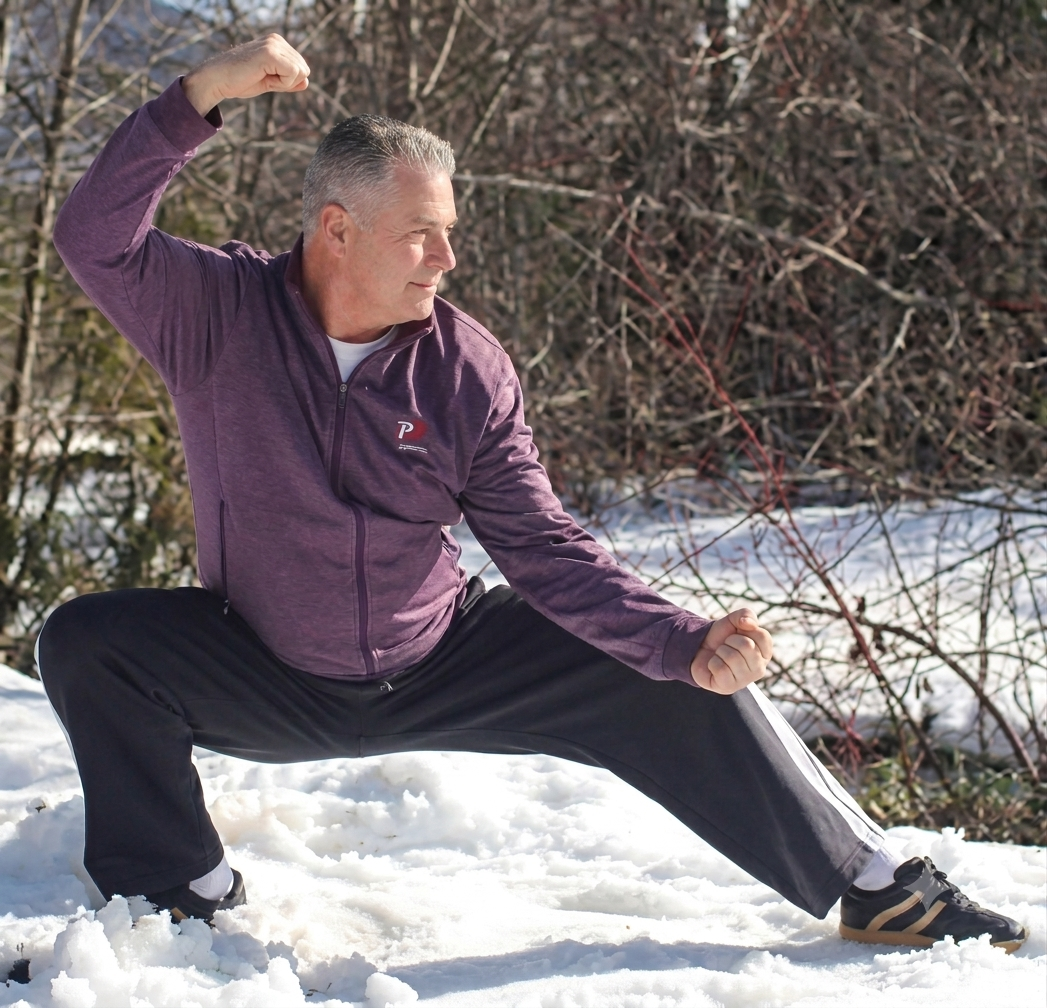
Tai Chi includes isometric holds, where muscles are engaged without movement. Holding postures like “Horse Stance” or “White Crane Spreads Its Wings” strengthens stabilizing muscles around joints, particularly in the hips, knees and shoulders.
This type of strength is crucial for joint integrity, especially in aging populations or those with arthritis. It builds tensile strength in ligaments and tendons, reducing injury risk and improving joint alignment.
Core Strength and Postural Control.
Tai Chi emphasizes movement from the “Dantian” (lower abdomen), which corresponds to the body’s centre of gravity. This focus builds deep core strength, including:
Transverse abdominis for spinal support.
Multifidus and erector spinae for posture.
Pelvic floor muscles for stability.
Core strength is essential for balance, fall prevention and spinal health. Tai Chi’s emphasis on upright posture and fluid transitions trains the body to maintain alignment under dynamic conditions.
Breath Integration and Energy Efficiency.
Tai Chi integrates diaphragmatic breathing with movement, which improves oxygen delivery to muscles and enhances aerobic endurance. This breath-movement coordination also activates the Vagus nerve, improving heart rate variability and reducing stress-related muscle tension.
Over time, this leads to better muscle recovery, reduced fatigue and improved stamina—key components of sustainable strength.
Clinical Evidence: What the Research Shows
BMJ Open Sport & Exercise Medicine (2021)
A meta-analysis of 31 studies found Tai Chi significantly improved:
Handgrip strength by 2.34 kg.
Walking distance in 6-minute walk tests by 43.37 metres.
Single-leg stance time by 6.41 seconds
Thoracolumbar spine flexibility by 2.33 cm. These gains reflect improvements in muscular strength, endurance and postural control.
Australian Government Natural Therapies Review (2023)
Commissioned by the NHMRC, this technical report confirmed that Tai Chi:
Improves muscle strength and flexibility
Enhances postural balance and endurance
Is effective for preventing frailty and falls in aging populations
Tai Chi Academy Evidence Map
This resource compiles global studies showing Tai Chi’s impact on:
Lower fat mass and improved muscle tone
Enhanced brain functional specialization
Improved cardiovascular markers and strength in hypertensive adults
Mechanisms of Strength Development
Tai Chi builds strength through:
Eccentric loading: Muscles lengthen under tension during slow transitions
Proprioceptive training: Enhances body awareness and joint control
Myofascial engagement: Activates connective tissue networks for integrated strength
Hormonal regulation: Reduces cortisol and inflammatory cytokines, supporting muscle repair
Ideal for All Ages and Conditions
Tai Chi is especially effective for:
Older adults: Builds strength without joint strain
People with arthritis or osteoporosis: Improves mobility and bone density
Stroke or injury recovery: Rebuilds strength through safe, progressive movement
Athletes: Enhances balance, coordination, and muscular control
Please follow our website for regular updates on written content, pictures, videos, training packages and upcoming workshops.

Click on the button below to learn more about Tai Chi Classes.
Click on the button below to get in touch.